
How to Store THC Gummies: The Complete Storage & Shelf Life Guide
By Sara S. | October 2026 | Cannabis & Wellness Contributor
THC gummies are easy to store, but where you keep them can make a big difference in their freshness, texture, flavor and potency.
The best way to store THC gummies is in their original, tightly sealed packaging in a cool, dry and dark location away from direct sunlight, heat and humidity. For most commercially made gummies, including pectin-based gummies, a cabinet, pantry or drawer at a stable room temperature works well. Refrigeration can be useful in particularly hot environments, while freezing may be an option for longer-term storage.
There is a little more to it, especially if you’re stocking up or trying to figure out whether the gummies you found in the back of a cabinet are still good.
Here’s what you need to know.
Why Proper THC Gummy Storage Matters
There are actually two different things you’re trying to preserve when storing THC gummies:
- The gummy itself: its freshness, flavor, texture and overall food quality.
- The cannabinoids inside it: including THC, CBD, CBN, CBG or other cannabinoids in the formula.
Those don’t necessarily deteriorate at exactly the same rate.
A gummy can become harder or stickier without necessarily being spoiled. Likewise, cannabinoids can gradually degrade even when a gummy still looks perfectly normal.
Proper storage helps protect both.
For THC gummies, the four biggest things to control are heat, light, air and moisture.

The 4 Things That Can Affect THC Gummies
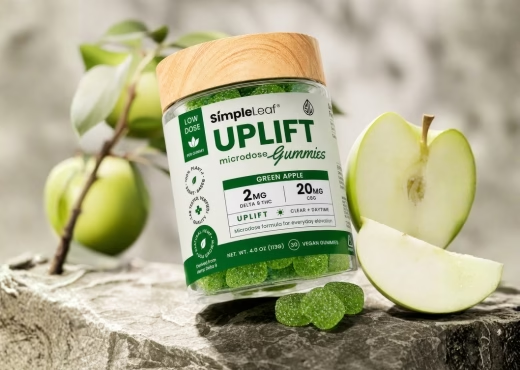
1. Heat
Heat is one of the fastest ways to turn a perfectly good jar of gummies into a sticky mess.
Anyone who has accidentally left gummies in a hot car has probably seen the result. They can soften, melt or fuse together.
Heat can also accelerate chemical changes in cannabinoids over time. Research into cannabinoid stability has found temperature to be an important factor in long-term THC degradation.
That’s why your car, a sunny windowsill, the area above your stove and other hot locations are poor choices for storing edibles.
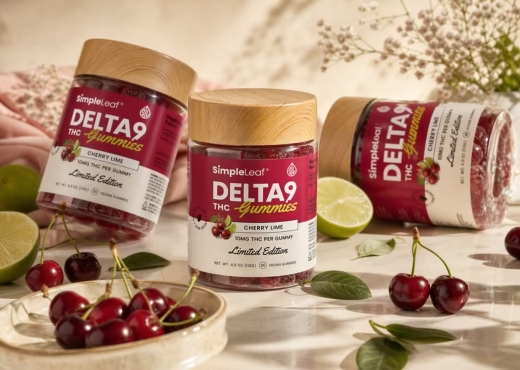
2. Light
Sunlight isn’t great for cannabinoids either.
Research into cannabis stability has found that light exposure can contribute to cannabinoid degradation. That makes a dark cabinet, pantry or drawer preferable to leaving gummies sitting on a countertop in direct sunlight.
Opaque packaging provides another layer of protection.
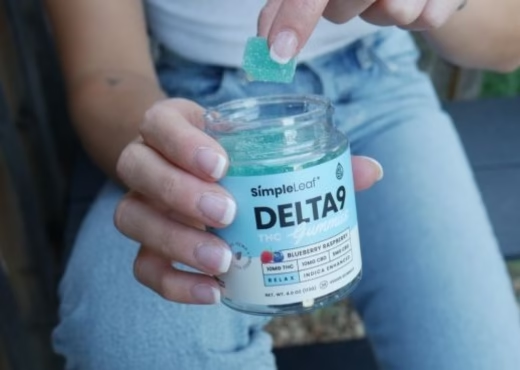
3. Air
Every time a package is opened, its contents are exposed to air and oxygen.
Over long periods, oxidation can contribute to cannabinoid degradation, while exposure to air can also affect the moisture content and texture of the gummy itself.
Keep the package tightly closed between servings.

4. Moisture and Humidity
Humidity can have a noticeable effect on gummy texture, especially with pectin-based gummies.
Too much moisture can leave gummies excessively soft, wet or sticky. Too little moisture can cause them to dry out and become firmer or harder to chew.
A tightly sealed package helps protect gummies from both extremes.
What About Pectin-Based THC Gummies?
The ingredients used to make a gummy can affect how it responds to storage conditions.
Many THC gummies, including Simple Leaf THC gummies, are made with pectin rather than gelatin. Pectin is a plant-based gelling ingredient commonly used to create vegan gummies.
Pectin gummies can be particularly sensitive to changes in moisture and humidity. If they’re exposed to too much moisture, they may become soft or sticky. If they lose too much moisture, they can gradually become firmer or harder to chew.
Heat can also soften pectin gummies and cause individual pieces to stick or fuse together, which is another reason not to leave them in a hot vehicle or direct sunlight.
For pectin-based THC gummies, the basic storage rule is simple:
Keep them tightly sealed, cool, dry and dark.
Keeping the original package properly closed is especially important because it helps limit changes in moisture that can affect texture.
Pectin vs. Gelatin Gummies
Both pectin and gelatin gummies benefit from cool, dry and dark storage, but they don’t always respond to environmental conditions in exactly the same way.
Pectin is plant-based and is commonly used in vegan gummies, while gelatin is derived from animal collagen. Their different structures can produce different textures and responses to heat and moisture.
Regardless of which type you have, the manufacturer’s storage instructions should always take priority.
The Best Way to Store THC Gummies
For most commercially produced THC gummies, proper storage is surprisingly simple.
Keep Them in Their Original Packaging
Unless the manufacturer says otherwise, the original package is usually the best place for your gummies.
Quality gummy packaging is designed to help protect the product from environmental exposure. It should also contain important information such as cannabinoid content, lot information and the product’s best-by or expiration date.
Once you’ve opened the package, close it completely after every use.
Choose a Cool, Dark and Dry Location
A bedroom closet, cabinet or pantry away from appliances can work well.
You’re looking for somewhere with:
A relatively stable room temperature
Minimal humidity
No direct sunlight
No nearby heat source
Avoid windowsills, bathrooms, areas near ovens or heating vents, garages that experience major temperature swings, and especially vehicles.
Use an Airtight Container When Necessary
If the original package becomes damaged or no longer seals properly, transfer the gummies to a clean, food-safe airtight container.
Opaque or dark containers provide additional protection from light.
If you transfer THC gummies out of their original package, keep the original label or clearly label the new container with the product name, THC amount and relevant date information.
Never put THC gummies into an unlabeled candy container where they could be mistaken for ordinary candy.
Should You Refrigerate THC Gummies?
Usually, you don’t need to refrigerate commercially produced THC gummies unless the product label recommends it.
A cool, dark cabinet is generally more convenient for everyday storage and avoids repeatedly exposing the gummies to large temperature changes.
However, refrigeration can make sense if your home becomes particularly warm or you’re trying to protect gummies during hot weather.
There’s one catch: moisture.
Moving a cold container into warm, humid air can cause condensation. Refrigerators also contain moisture and food odors.
If you refrigerate THC gummies:
- Keep them tightly sealed in an airtight container.
- Keep them away from strong-smelling foods.
- Avoid repeatedly moving the entire container between cold and warm environments.
- Follow any storage directions provided by the manufacturer.
For pectin gummies in particular, controlling moisture is important for maintaining their intended texture.
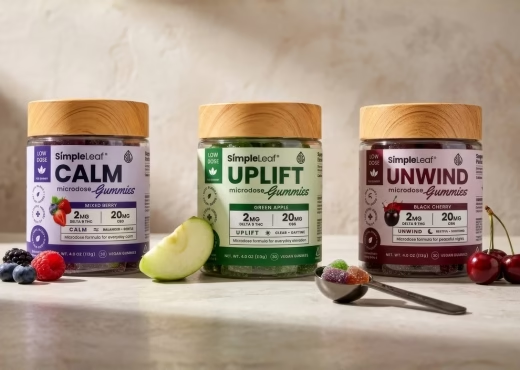
Can You Freeze THC Gummies?
Many commercially produced gummies can be frozen for longer-term storage, although you should check the manufacturer’s recommendations first.
Lower temperatures generally slow chemical reactions, and cannabinoid stability research has found better long-term preservation under colder storage conditions.
But freezing usually isn’t necessary for gummies you’re going to finish relatively soon.
If you do freeze THC gummies, seal them carefully in an airtight, freezer-safe package. If you’re storing a larger quantity, dividing the gummies into smaller portions can prevent you from repeatedly thawing and refreezing the entire supply.
When you’re ready to use them, allow the sealed package to gradually return toward room temperature before opening it. This can help reduce condensation forming directly on the gummies.
Keep in mind that freezing and thawing can change the texture of some gummy formulations.
Pantry vs. Refrigerator vs. Freezer
Here’s the easy version:
| Storage Location | Best For | What to Know |
|---|---|---|
| Cool cabinet or pantry | Everyday storage | Usually the easiest choice for commercially made gummies |
| Refrigerator | Hot environments or certain longer-term storage situations | Keep gummies airtight to protect against moisture and odors |
| Freezer | Longer-term storage | Seal carefully and thaw while sealed to help minimize condensation |
| Car | Never recommended | Temperatures can climb quickly and cause gummies to soften or melt |
| Windowsill | Never recommended | Combines light exposure with temperature fluctuations |
| Bathroom | Avoid | Humidity and temperature can fluctuate significantly |
Always follow the storage directions and date printed on your specific product.
How Long Do THC Gummies Last?
There isn’t one universal shelf life for every THC gummy.
How long gummies remain at their best depends on several factors, including:
- The gummy formulation
- Ingredients
- Moisture and water activity
- Packaging
- Whether the package has been opened
- Storage temperature
- Exposure to light and oxygen
- Manufacturing and packaging methods
Commercial gummies can have a considerably longer shelf life than homemade edibles because they may be specifically formulated and packaged for shelf stability.
Rather than assuming every THC gummy lasts six months, one year or two years, use the manufacturer’s best-by or expiration date as your primary guide.
Proper storage helps the product maintain its intended quality throughout that period.
Do THC Gummies Lose Potency Over Time?
THC isn’t infinitely stable.
Research into cannabinoid stability has shown that THC can degrade over time and that environmental factors such as temperature, light and oxygen can influence the rate of degradation.
That doesn’t mean a properly stored gummy suddenly becomes ineffective on a particular day. Degradation occurs gradually.
It does mean that an old package that spent months exposed to excessive heat and sunlight may not be equivalent to a package that was properly stored.
This is another reason to pay attention to both storage conditions and the date on the package.
Do THC Gummies Expire?
Yes. THC gummies don’t last forever.
But “expiration” involves more than THC potency because gummies are also food products.
The ingredients in the gummy itself can deteriorate, change texture or eventually spoil. That’s separate from the gradual chemical degradation of THC and other cannabinoids.
Think of it this way:
Freshness tells you about the gummy. Potency tells you about the cannabinoids. Food safety tells you whether you should eat it at all.
Those things are related, but they aren’t exactly the same.
How Can You Tell if THC Gummies Have Gone Bad?
Check the gummies before consuming an older or improperly stored package.
Potential warning signs include:
- Visible mold
- An unusual or unpleasant odor
- Unexpected discoloration
- Excessive moisture or sliminess
- Significant unexplained changes in appearance
- Damaged or compromised packaging
If you see mold or the product smells spoiled, discard it.
A gummy becoming somewhat harder is different. Gummies, particularly pectin gummies, can lose moisture and become firm or stale over time without necessarily being spoiled.
If you’re uncertain about the condition of an edible, replacing it is a much better bet than trying to determine its safety with a taste test.
Why Did My THC Gummies Get Hard?
If your gummies have become harder than they were when you first opened them, moisture loss is a likely culprit.
This can be especially noticeable with pectin-based gummies.
Leaving the package open or failing to seal it completely allows the gummies to interact with the surrounding air. Over time, changes in moisture can cause their texture to become firmer and less enjoyable to chew.
A hard gummy isn’t automatically a spoiled gummy.
Check the product’s date, packaging, smell, appearance and storage history. If it’s within the manufacturer’s recommended shelf life and shows no signs of spoilage, the change may simply be a freshness or texture issue.
The best prevention is simple: close the package tightly every time.
Why Did My THC Gummies Get Sticky?
The opposite can happen too.
Exposure to heat and humidity can soften gummies and make their surfaces increasingly sticky. This doesn’t automatically mean they’ve spoiled, but it can be a sign that they haven’t been stored under ideal conditions.
Move them to a cooler environment and make sure the package is properly sealed.
If you notice unusual moisture, odors, discoloration, mold or other signs of spoilage, discard them.
What if My THC Gummies Melted Together?
This happens, especially during summer.
If gummies have simply softened or fused together because of heat, that doesn’t automatically mean they’ve spoiled.
There is another consideration with THC gummies, though: consistent dosing.
Commercial gummies are manufactured to provide a particular amount of THC per serving. When individually portioned gummies melt extensively and combine into one mass, accurately dividing that mass back into the original servings may become difficult.
For that reason, heavily melted gummies shouldn’t automatically be treated as perfectly interchangeable with their original individual servings.
If the package was damaged, contaminated or exposed to questionable conditions, it’s safer to replace it.
What if I Left THC Gummies in a Hot Car?
Get them out of the car and allow them to return to a normal temperature before deciding what to do.
Vehicles can become extremely hot, and gummies may soften or melt quickly under those conditions.
A brief period in a warm car isn’t necessarily the same as leaving gummies in extreme heat for days, so there isn’t a universal number of minutes after which every gummy becomes unusable.
Inspect the packaging and gummies.
If individual servings have completely melted together, the package has been compromised, or there are signs of contamination or spoilage, replacement is the safer choice.
And don’t use the glove compartment as permanent edible storage. Your gummies deserve better.
How to Store THC Gummies When Stocking Up
Buying multiple jars during a sale?
Don’t open all of them.
Keep unopened gummies in their original sealed containers and store them together in a cool, dark and dry location. Open one container at a time.
This reduces the amount of exposure each package receives to oxygen, humidity and changing environmental conditions.
Also rotate your supply. Use the oldest appropriately stored package first and pay attention to the best-by or expiration dates printed on each container.
For longer-term storage, follow the manufacturer’s recommendations regarding refrigeration or freezing.
How to Store Homemade THC Gummies
Homemade edibles are a different story.
Their shelf life can vary dramatically based on the recipe, ingredients, moisture content, preservatives, preparation methods and storage conditions.
Homemade gummies shouldn’t automatically be assumed to have the same shelf life as commercially manufactured and packaged THC gummies.
Follow the specific recipe’s storage instructions. When in doubt, refrigeration or freezing may be more appropriate for homemade products, depending on the formulation.
Keep THC Gummies Away From Children and Pets
Freshness isn’t the only reason storage matters.
THC gummies can look and smell like ordinary candy. They should always be stored securely away from children and pets, preferably in their original child-resistant packaging and in a locked or otherwise inaccessible location.
Don’t rely solely on placing them on a high shelf.
And don’t transfer THC gummies into ordinary candy bags, jars or other containers that could make them easier to mistake for regular food.
Quick Guide: How to Store THC Gummies
For everyday storage, remember four words:
Cool. Dry. Dark. Sealed.
Keep THC gummies in their original packaging whenever possible and store them in a cabinet, drawer or pantry away from direct sunlight, heat and humidity.
For pectin-based gummies like those from Simple Leaf, keeping the package tightly sealed is particularly important for maintaining the intended texture and protecting the gummies from changes in environmental moisture.
Avoid keeping gummies in your car. Refrigeration generally isn’t necessary for everyday storage unless recommended by the manufacturer or your environment becomes particularly warm.
For longer-term storage, freezing properly sealed gummies may be an option, although their texture can change.
Most importantly, follow the storage instructions and best-by date on the specific product you’re using.
Frequently Asked Questions About Storing THC Gummies
What is the best way to store THC gummies?
Keep THC gummies tightly sealed in their original packaging in a cool, dry and dark place away from heat, sunlight and humidity. A cabinet or pantry with a relatively stable room temperature works well for many commercially produced gummies.
Usually not. Most shelf-stable commercial THC gummies can be stored at room temperature according to their manufacturer’s directions. Refrigeration may be useful in particularly hot environments, but gummies should be tightly sealed to protect them from moisture.
Not necessarily. Commercially produced pectin gummies can often be stored in a cool, dry place at room temperature. Pectin gummies can be sensitive to changes in moisture, so keeping the package properly sealed is especially important. Always follow the manufacturer’s instructions.
Many gummies can be frozen for longer-term storage. Use airtight, freezer-safe packaging and keep in mind that freezing and thawing may affect their texture.
Yes. Gummies have a finite shelf life, and THC itself can gradually degrade over time. Check the manufacturer’s date and storage directions rather than assuming every gummy has the same shelf life.
Prolonged exposure to elevated temperatures can accelerate cannabinoid degradation. Heat can also soften or melt gummies and affect the consistency of individual portions.
Light exposure can contribute to cannabinoid degradation over time. Keep gummies out of direct sunlight and preferably inside their original packaging in a dark storage location.
There isn’t a universal timeline. It depends on the formulation, packaging and storage conditions. Reseal the package after each use and follow the manufacturer’s best-by or expiration date.
Yes. Like other food products, gummies can spoil under the wrong conditions. If you see visible mold or notice an unusual odor, excessive moisture or other signs of spoilage, discard the package.
Not necessarily. Gummies can harden as they lose moisture, and this can be particularly noticeable with pectin-based gummies. Hardness can be a quality or freshness issue rather than proof of spoilage. Check the expiration date, appearance, smell and storage history.
Melting doesn’t automatically mean gummies are spoiled, but heavily melted gummies can make individual dosing less reliable. If the packaging was compromised or there are signs of contamination or spoilage, discard them.
A cool location with a relatively stable room temperature is appropriate for many commercially produced THC gummies. Avoid excessive heat and major temperature fluctuations, and follow any specific temperature recommendations printed on the product packaging.
The Bottom Line
THC gummies don’t require a complicated storage system.
For most commercially produced gummies, the formula is simple:
Keep them cool. Keep them dry. Keep them dark. Keep them sealed. And keep them securely away from children and pets.
For pectin-based THC gummies, controlling exposure to moisture and humidity is particularly helpful for maintaining the texture you expect. Too much moisture can contribute to stickiness, while moisture loss can leave gummies firmer and harder to chew.
Good storage protects more than flavor and texture. It can also help protect the cannabinoids and consistent experience you purchased the gummies for in the first place.
And when you’re genuinely unsure about an old or improperly stored package, don’t gamble on it. Gummies are replaceable.
Want to Learn More (From Us)
If you’re curious about how Simple Leaf, be sure to subscribe to our content.
We’re happy to share insights, product development information, and promotional offers when they’re available.
Here’s to clearer choices, smarter cannabinoid use, and finding the compound that works for you.
Disclaimer: This CBD+CBG Gummies article is for informational purposes only. Always consult a healthcare professional before using any type of hemp products.
